The honest, detailed comparison — covering cost, absorbency, sustainability, sanitation, and whether the switch is actually worth it.
The Paper Towel Problem Nobody Talks About
Paper towels are so deeply embedded in kitchen life that most of us never stop to question them. You spill something, you grab one. You dry your hands, you grab one. You wipe down the counter — you guessed it — another one gone.
But those little sheets add up faster than you'd think. Americans spend roughly $5.7 billion on paper towels every year — more than the rest of the world combined. And when each one hits the trash, it doesn't recycle (paper towels can't be recycled once they've been used), and it doesn't compost quickly either, thanks to the wet-strength chemicals added during manufacturing.
The result? More than 3,000 tons of paper towel waste generated in the U.S. alone, every single year. Globally, that number climbs to an estimated 254 million tons of trash.
Enter: the Swedish dishcloth. It's been a kitchen staple in Scandinavia for decades, and it's finally getting the attention it deserves here in the U.S. But does it actually hold up against the convenience of a paper towel? Let's get into it.
What Is a Swedish Dishcloth, Exactly?
Before we compare them, let's make sure we're on the same page about what a Swedish dishcloth actually is — because a lot of people have never heard of them, or aren't quite sure what to expect.
Swedish dishcloths were invented in the late 1940s by Swedish engineer Curt Lindquist. He wanted to create something that had the absorbency of a sponge but dried quickly like a towel — so it wouldn't sit damp on the counter getting gross between uses. The material he developed? A blend of 70% wood pulp cellulose and 30% cotton.
That combination is key. The cellulose gives the cloth its incredible absorbency and that slightly stiff texture when dry (which softens the moment it gets wet). The cotton gives it flexibility, durability, and a softer feel. Together, they create something that genuinely outperforms both sponges and paper towels in most kitchen tasks.
At Corvidae, our Swedish dishcloths are made from this same cellulose-cotton blend and feature original hand-drawn artwork — wildlife, wildflowers, ravens, botanicals — all designed and printed right here in Kalispell, Montana. They're beautiful enough to leave on the counter and tough enough to handle whatever your kitchen throws at them.
💡 Quick definition: Swedish dishcloths are also sometimes called 'sponge cloths' or 'cellulose dishcloths.' If you see those terms, they're talking about the same thing.
The Numbers: Swedish Dishcloth vs. Paper Towels at a Glance
Let's start with the stats, because they're genuinely striking:
Up to 17 rolls of paper towels replaced by a single Swedish dishcloth
15–20x their own weight in liquid that Swedish dishcloths can absorb
$5.7 billion spent by Americans on paper towels annually
9–12 months typical lifespan of a well-cared-for Swedish dishcloth
100% compostable at end of life — no landfill required
0% paper towels that can be recycled after use
That last one is worth sitting with for a second. Paper towels — even the ones made from recycled materials — cannot themselves be recycled. Once used, they go straight to landfill, every time. Swedish dishcloths, on the other hand, can be composted when they've finally run their course.
Head-to-Head: 6 Categories That Actually Matter
1. Absorbency — Swedish Dishcloth Wins
This is where Swedish dishcloths genuinely shine. A single cloth can absorb 15 to 20 times its own weight in liquid. That's not a marketing claim — it's down to the cellulose structure of the material, which has far more surface area at the fiber level than a standard paper towel.
Paper towels do absorb liquid, but they saturate quickly, leave streaks on surfaces like glass and stainless steel, and often require two or three sheets to handle a bigger spill. A Swedish dishcloth handles the same spill in a single squeeze.
Verdict: For spills, wet messes, and any task requiring real absorbency, the Swedish dishcloth is the clear winner.
2. Convenience — Paper Towels Win (But Not By Much)
Let's be honest here: paper towels are convenient. You rip one off, use it, toss it. No rinsing, no wringing, no thinking. For truly disgusting tasks — cleaning up after a sick pet, dealing with raw meat, handling something you'd rather just throw away — a disposable option has its place.
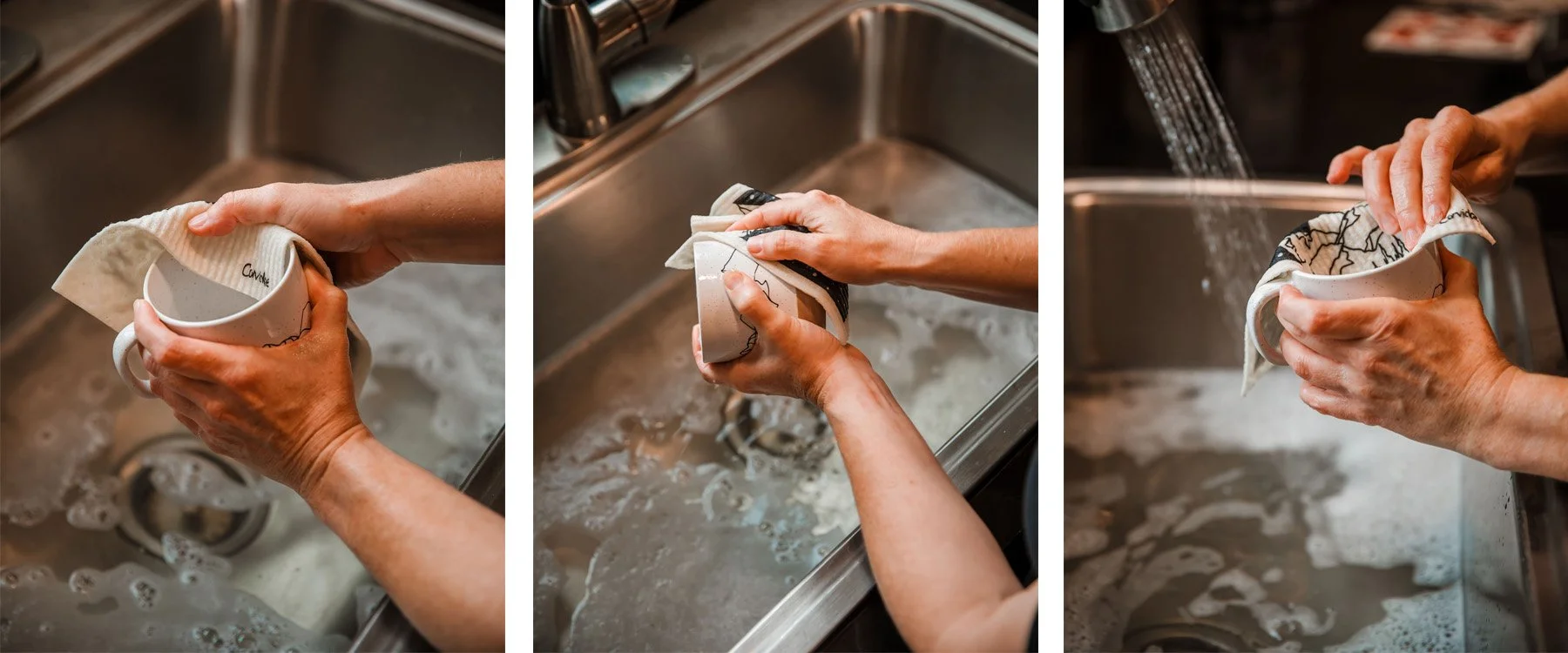
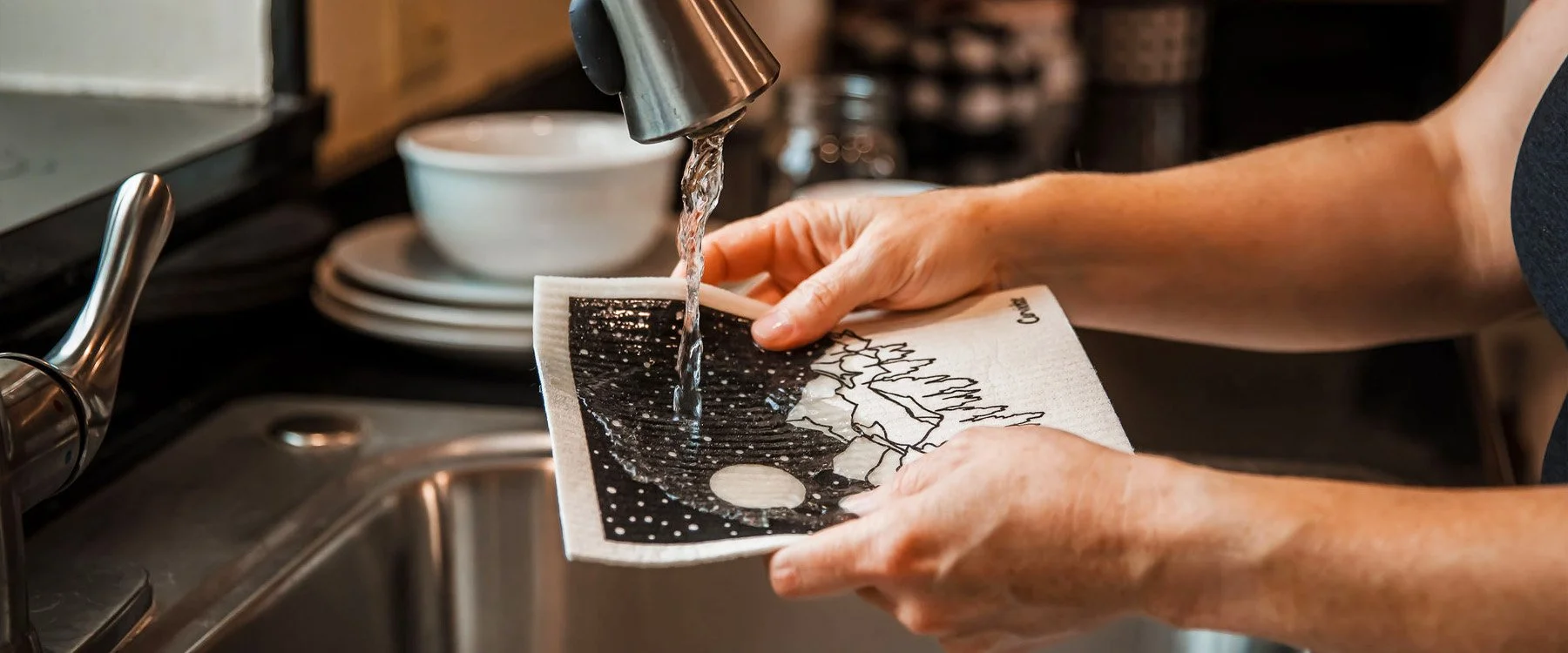
Swedish dishcloths require a slightly different habit. After use, you rinse them under the tap, wring them out, and let them air dry. That's about 15 seconds of extra effort. Most people who make the switch say they barely notice it after a week.
Verdict: Paper towels win on pure convenience for one-and-done tasks. For everyday kitchen cleaning, the dishcloth is just as easy once it becomes habit.
🔄 Good to know: Many Swedish dishcloth users keep a small stash of paper towels for truly disposable tasks (think: draining bacon, wiping up something genuinely gross) while using dishcloths for everything else. The hybrid approach is totally valid.
3. Cost — Swedish Dishcloth Wins, Big
This one adds up faster than most people realize. A standard roll of paper towels costs somewhere between $1.50 and $3.00. If you go through one roll a week — which is on the low end for a busy household — that's $78 to $156 per year. Per person. On paper towels alone.
A single Corvidae Swedish dishcloth runs about $7-$8 and lasts anywhere from 6 to 12 months with regular use, sometimes even longer with proper care! Even if you use three or four at a time (rotating them through washing cycles), you're spending a fraction of what you'd spend on paper towels.
Verdict: Over the course of a year, Swedish dishcloths save most households real money. Not a small amount — we're talking potentially $100+ annually for a family that goes through paper towels quickly.
4. Environmental Impact — Swedish Dishcloth Wins, Decisively
This is where the difference is most stark. Paper towel production is resource-intensive: it requires trees (often virgin wood pulp), enormous amounts of water, and chemical processing. And because used paper towels can't be recycled, every single one ends up in a landfill.
A 2012 MIT study found that just two paper towels generate approximately 15 grams of CO2 emissions — comparable to burning 11 gallons of gasoline. Multiply that by how many you use in a year, and the number gets uncomfortable quickly.
Swedish dishcloths, made from plant-based cellulose and cotton, have a dramatically smaller footprint. They extend the useful life of those plant fibers across hundreds of uses. And when they're finally done, they go into the compost bin — not the landfill. The cellulose breaks down naturally, leaving nothing harmful behind.
One estimate suggests switching to Swedish dishcloths could help a single household eliminate around 200 pounds of CO2 emissions per year. That's a meaningful number.
Verdict: Not even close. Swedish dishcloths win on every environmental metric — production impact, waste, and end-of-life disposal.
5. Sanitation — This One Surprises People
The most common concern about reusable dishcloths is bacteria. And it's a fair question — nobody wants a germ-ridden cloth spreading bacteria across their kitchen counters.
Here's what most people don't realize: standard kitchen sponges are actually the most bacteria-laden item in the average home. Studies have found more active bacteria on a kitchen sponge than on a toilet seat. The reason? Sponges stay wet, and moisture is where bacteria thrive.
Swedish dishcloths are specifically designed to avoid this problem. Their quick-drying structure means they don't hold moisture the way a sponge does, which dramatically slows bacterial growth between uses. And when they need a deeper clean, they're completely machine washable — toss them in the dishwasher or washing machine and they come out sanitized and ready to go.
You can also disinfect them in the microwave: wet the cloth, then microwave it for 1 to 2 minutes. (Make sure it's damp — a dry cloth can burn.) Or boil them. Paper towels offer no such option — they're single use and gone.
🦠 Bottom line on bacteria: A properly cared-for Swedish dishcloth is more hygienic than a sponge and functionally comparable to a fresh paper towel — with the added benefit of being washable when it gets genuinely dirty.
Verdict: Swedish dishcloths are more hygienic than sponges, and just as clean as paper towels when cared for properly.
6. Versatility — Swedish Dishcloth Wins
Paper towels do one thing: wipe. Swedish dishcloths do considerably more:
• Wiping down counters and kitchen surfaces
• Washing dishes (yes, like a sponge)
• Cleaning glass and mirrors without streaking
• Scrubbing light residue off pots and pans
• Dusting furniture and shelves
• Drying produce after washing
• Even light bathroom cleaning
The same cloth you use to wipe up a spill can also clean your stovetop, rinse out and handle your next task. The material is gentle enough for delicate surfaces and absorbent enough for serious messes.
Verdict: Swedish dishcloths are significantly more versatile. Paper towels are single-purpose; dishcloths adapt to nearly any cleaning task.
How to Care for Your Swedish Dishcloth (So It Lasts as Long as Possible)
Getting the most out of a Swedish dishcloth is mostly about one thing: letting it dry between uses. Here's everything you need to know:
• After each use, rinse the cloth under warm running water with a little dish soap and wring it out well. Lay it flat or hang it to dry completely
• For regular deep cleaning, toss it in the dishwasher (top rack) or the washing machine. It can handle up to 200+ wash cycles.
• For quick sanitizing, wet the cloth and microwave it for 1 to 2 minutes. The heat kills bacteria without damaging the material.
• Replace it when it starts to look worn, thin, or permanently stained — usually after 6 to 12 months of daily use. At that point, it goes into the compost, not the trash.
• Avoid fabric softener in the washing machine — it reduces absorbency over time. Also avoid using harsh cleaners. For a more eco friendly option find cleaners at your local eco store, like the Good Food Store found in Missoula, MT
🌿 End-of-life tip: When your Swedish dishcloth is truly done, cut it into strips and bury it in your compost bin. It will break down naturally within a few weeks.
So Which Is Actually Better?
For the vast majority of everyday kitchen tasks — wiping counters, cleaning up spills, washing dishes, drying produce — the Swedish dishcloth is better in almost every measurable way. It's more absorbent, more durable, more eco-friendly, more cost-effective, and ultimately more versatile.
Paper towels still have a place for certain one-and-done tasks where disposability genuinely matters. But for daily kitchen use, a good Swedish dishcloth does the job better, costs less over time, and doesn't leave you constantly adding to the grocery list.
If you've never tried one, the learning curve is minimal — mostly just getting used to rinsing and hanging it up after use. Most people who make the switch say they wonder why they waited so long.
Try one of our Swedish Dishcloths
At Corvidae, our Swedish dishcloths are made from the same cellulose-cotton blend as the classic Swedish design, and printed with original hand-drawn artwork inspired by the great outdoors — wildflowers, national parks, huckleberries, mountains, and more.
They're beautiful enough to leave on your counter as a little piece of art, and tough enough to be your most-reached-for kitchen tool. We make them right here in Kalispell, Montana, and ship them across the U.S.
Fun Fact: Did you know we get our blank Swedish Dishcloths straight from Sweden? They even made an exclusive cut out shape of Montana! Incredibly unique while still as functional as a standard square shape.
Shop Corvidae Swedish dishcloths here → So Many Dishcloth Designs!
Frequently Asked Questions
Are Swedish dishcloths actually better than paper towels?
Yes — for most everyday kitchen tasks, Swedish dishcloths outperform paper towels on absorbency, durability, cost over time, and environmental impact. A single dishcloth can replace up to 17 rolls of paper towels, absorb 15–20 times its weight in liquid, and be composted at the end of its life. Paper towels are more convenient for truly disposable tasks, but for daily kitchen use, the dishcloth wins.
How do I know when to replace my Swedish dishcloth?
Replace your Swedish dishcloth when it starts to look thin, feel less absorbent, or develop permanent staining that doesn't wash out (option reason to toss). With daily use and proper care (rinsing after each use, washing regularly), most dishcloths last 6 to 12 months. When it's time, toss it in the compost — don't throw it in the trash. However, with proper care, some dishcloths can last up to 4 years!
Are Swedish dishcloths sanitary?
Yes, when properly cared for. Swedish dishcloths dry quickly between uses, which prevents the bacterial buildup that makes kitchen sponges so problematic. They can be sanitized in the dishwasher, washing machine, or microwave. A well-maintained Swedish dishcloth is more hygienic than a sponge and just as sanitary as a fresh paper towel.
Can Swedish dishcloths replace paper towels completely?
For most households, Swedish dishcloths can replace 80–90% of paper towel use. Many people keep a small backup supply of paper towels for specific situations (raw meat cleanup, extremely messy tasks, etc.) while using dishcloths for everything else. The hybrid approach works well and still dramatically reduces paper towel waste and spending.
How do you clean a Swedish dishcloth?
Rinse after each use with warm water and dish soap, then wring out and hang to dry. For deeper cleaning, run it through the dishwasher (top rack) or washing machine. For quick disinfecting, microwave it while damp for 1–2 minutes. Avoid fabric softener, as it reduces absorbency over time.
How long do Swedish dishcloths last?
With daily use and regular washing, a Swedish dishcloth typically lasts 6 to 12 months. That's the equivalent of up to 17 rolls of paper towels from a single cloth. Proper care — rinsing after use, letting it dry fully, and washing regularly — extends its lifespan significantly…Sometimes up to 4 years!
For more info on how long your dishcloths can last, Click HERE to check out our blog post about just that!
Are Swedish dishcloths compostable?
Yes — Swedish dishcloths are made from 70% wood pulp cellulose and 30% cotton, both of which are fully natural and compostable. When your dishcloth reaches the end of its life, cut it into strips and add it to your compost bin. It will break down naturally within a few weeks, leaving no harmful residue.
Where are Corvidae Swedish dishcloths made?
Corvidae Swedish dishcloths are made in Sweden and designed and printed in Kalispell, Montana, USA. Each one features original hand-illustrated artwork inspired by the great outdoors — wildlife, wildflowers, national parks, and more. They're made from a cellulose-cotton blend and printed with water based inks.